In order for students to stay convinced they should do math together, they need some reasons. Working together can’t be just a worksheet they could do alone. Why bother with the messiness of other humans when you can just put your head down and get the job done?
My favorite design move for supporting students to stay convinced they need each other is in materials design: I set the work up so they can’t do it without sharing the materials.
I first discovered this by accident. I had assigned the classic Painting Cubes Problem to introduce the use of variables in a seventh grade classroom. I knew my students would have more access if I gave them cubes so they could find patterns with their hands, but I only had about 200 cubes to share among groups. I went ahead anyway, even though my principal had scheduled my observation for that day.
She watched as students first grabbed cubes to build their own models, and get stuck. No one had enough materials to do the task alone. Then they leaned in and started talking, sharing and problem-solving.
I had only been teaching a few years, so didn’t I really know what to look for as students worked together. Lucky for me my boss did. In our debrief, she noted my ‘brilliance’ in providing so few cubes that no one could do the task alone.
That one observation opened up so much freedom: never again would I carefully count and allocate materials. I just have to make sure there’s not enough to do a task alone.
Read the full problem, republished from Martin Gardner in a 1973 NCTM Arithmetic Teacher article called “Mathematics through visual problems” and also at YouCubed.


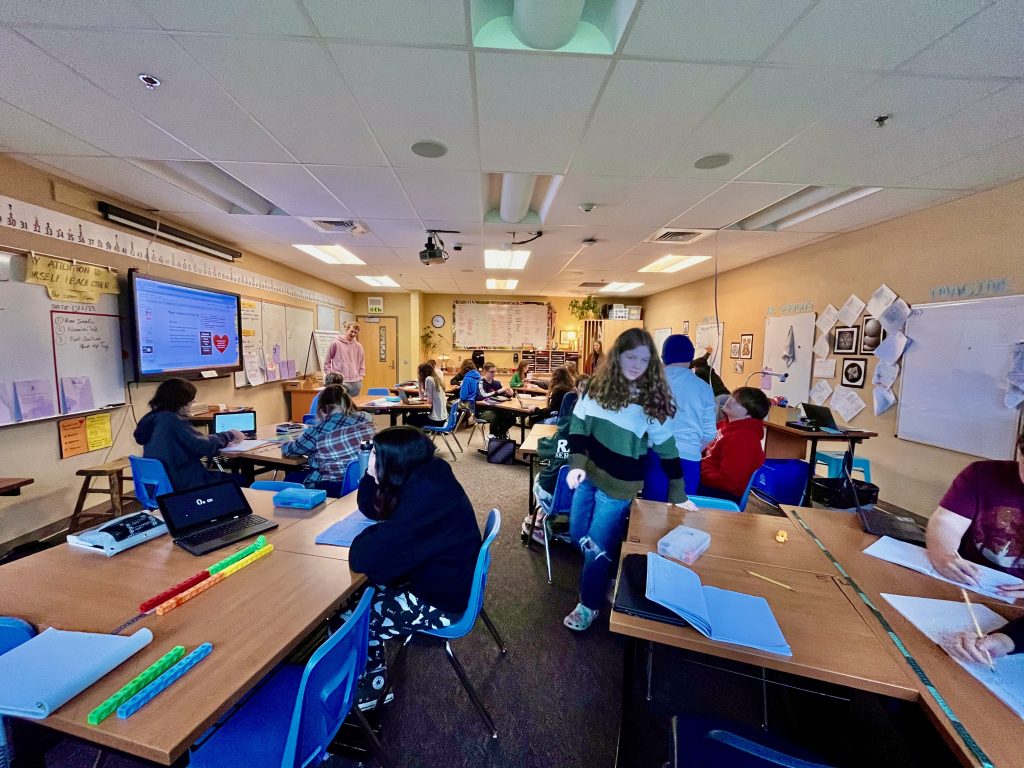 Collaborative learning doesn’t “just happen.” I had to convince students that they’d benefit from working together. Lucky for me, a teacher down the hall taught me about “Desk Olympics” which provided a competition between classes for which class could form groups of four the fastest. By the time groups had managed to move their tables together, they were interdependent. In a small way they knew they had people they could count on.